









Rent Tribunal Decisions Tracker
See what rent tribunals are deciding near you
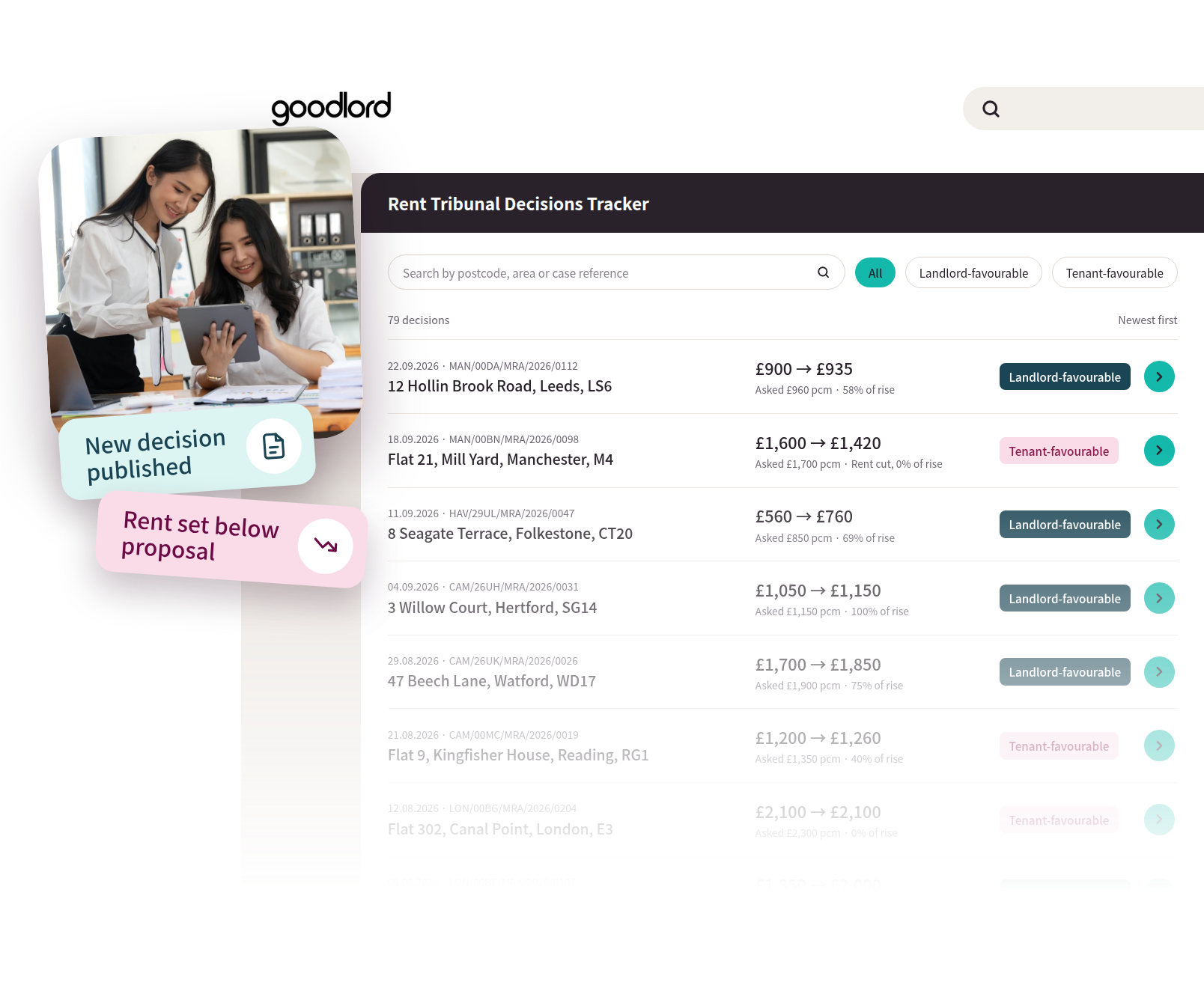
Every published First-tier Tribunal rent decision since the Renters' Rights Act, in one searchable list. Updated as new decisions come in.
Overview
How the Tribunal is ruling on rent increases
Every rent decision on applications made since 1 May 2026, when the Renters' Rights Act took effect. Figures update automatically as new decisions are published.
Since 1 May 2026
Rent set at least halfway to the landlord's ask
Rent set closer to the current rent
Average share of the requested rise
Source: Goodlord analysis of First-tier Tribunal rent decisions published on GOV.UK, on applications made since 1 May 2026. Figures are extracted automatically from each decision and may contain errors. Contains public sector information licensed under the Open Government Licence v3.0.
- Newest first
- Oldest first
Source: First-tier Tribunal rent decisions published on GOV.UK. Figures are extracted automatically from each decision and may contain errors, so check the original decision before relying on them. Contains public sector information licensed under the Open Government Licence v3.0.
Section 13
Get your next rent increase right
Use real comparables
Rents achieved on similar nearby lets carry more weight with the Tribunal than asking prices on portals.
Fix issues first
Disrepair is the most common reason increases get reduced, with damp and mould top of the list.
Get the notice right
The wrong form, too little notice or an incorrect start date can stop an increase taking effect.
Search by postcode, area or case reference. Filter by region and type of case.
FAQs
Frequently Asked Questions
What is the First-tier Tribunal and how does it relate to Section 13?
The First-tier Tribunal (Property Chamber) is an independent body that resolves certain disputes between landlords and tenants, including disagreements over proposed rent increases.
Under the Renters’ Rights Act, landlords of private assured periodic tenancies in England must use the Section 13 process to increase rent.
If a tenant believes the proposed increase exceeds the property’s open market rent, they can apply to the Tribunal to determine the appropriate amount.
The Tribunal can also consider whether a Section 13 notice is legally valid.
How much can landlords increase rent under the Renters' Rights Act?
There’s no fixed percentage cap on rent increases, but landlords must follow the Section 13 process.
If a tenant challenges the proposed increase, the First-tier Tribunal assesses the property’s open market rent and cannot set an amount higher than the landlord proposed.
Using relevant market evidence to support a realistic rent increase can help reduce the risk of a challenge.
How often can a landlord increase rent under the Renters' Rights Act?
Landlords can increase rent once every 12 months using a Section 13 notice (Form 4A), giving tenants at least two months’ notice.
Rent cannot be increased during the first 12 months of a tenancy.
The Section 13 process must be followed even where the landlord and tenant have already agreed an increase. Rent review clauses can no longer be used to increase rent outside this process.
How does a tenant challenge a rent increase at the First-tier Tribunal?
A tenant can apply to the First-tier Tribunal before the proposed increase takes effect if they believe the rent exceeds the property’s open market value.
The application costs £47, although exemptions and financial assistance may be available.
Tenants can also challenge whether the Section 13 notice is legally valid.
Once an application challenging the proposed rent has been made, the tenant continues paying their existing rent while the Tribunal considers the case.
Both parties can submit evidence, and the Tribunal may arrange an inspection or hearing before making its decision.
How does the First-tier Tribunal decide on the open market rent?
A tenant can apply to the First-tier Tribunal before the proposed increase takes effect if they believe the rent exceeds the property’s open market value.
The application costs £47, although exemptions and financial assistance may be available.
Tenants can also challenge whether the Section 13 notice is legally valid.
Once an application challenging the proposed rent has been made, the tenant continues paying their existing rent while the Tribunal considers the case.
Both parties can submit evidence, and the Tribunal may arrange an inspection or hearing before making its decision.
What powers does the First-tier Tribunal have over rent increases?
The Tribunal determines the property’s open market rent and decides what rent is payable following a valid challenge.
The new rent cannot exceed the amount proposed in the Section 13 notice.
Depending on the evidence, the Tribunal may confirm the proposed rent, reduce the increase or determine a rent below the tenant’s existing amount.
If applying the normal start-date rules would cause undue hardship to the tenant, the Tribunal can direct a later date, subject to a statutory limit of two months from its determination.
If the Section 13 notice is invalid, the proposed increase cannot take effect through that notice.
What happens to the rent while a First-tier Tribunal challenge is ongoing?
The tenant keeps paying their existing rental amount while the Tribunal considers the challenge.
If the Tribunal makes its decision after the proposed increase date, the new rent will generally take effect from the beginning of the first new tenancy period on or after the determination.
If the decision is made before the proposed increase date, the new rent will generally take effect from the date specified in the notice.
The Tribunal can direct a later start date where the normal rules would cause undue hardship, subject to the statutory limit.
Goodlord’s Rent Protection & Legal Expenses Insurance may provide cover in eligible circumstances, subject to policy terms and conditions.
Why does the First-tier Tribunal reduce rent increases?
Most reductions come down to property condition or weak comparable evidence. Disrepair or maintenance issues came up in about half of the decisions in our register, with damp and mould the most common complaint by a clear margin, followed by heating and boiler faults. Weak comparable evidence is second, featuring in around three in ten cases. Tenant hardship is raised often but rarely changes the rent figure on its own.
What evidence should landlords submit if a rent increase is challenged?
Landlords should provide clear evidence supporting the proposed rent, particularly recent rental agreements for comparable properties in the local area.
Useful supporting documents include:
- A copy of the Section 13 notice and evidence of service.
- The tenancy agreement.
- Evidence of rents achieved for similar nearby properties.
- Property inspection reports and photographs.
- Records of repairs, maintenance and improvements.
- Relevant information about the property’s size, features and condition.
Where tenants have raised maintenance or disrepair concerns, landlords should provide evidence of how those issues have been addressed.
How should landlords prepare for a Section 13 rent increase and a possible Tribunal challenge?
Preparation starts before the notice is served. Gather evidence of rents actually achieved on genuinely comparable properties nearby, and keep an up-to-date record of the property’s condition, including inspection reports, photos and repair records. Fix any known issues where you can, and make sure the notice is valid, with the correct form, notice period and start date. Keep proof of when and how it was served.
If the tenant challenges the increase, respond promptly and follow the Tribunal’s directions and deadlines for evidence. Explain why the proposed rent reflects the local market, using your comparables and accounting for differences in size, condition and location. Address any maintenance concerns the tenant raises, with inspection reports and repair records. If the Tribunal arranges an inspection, make sure access can be given and the property can be seen in its usual condition.
Can a Section 13 rent increase fail because of a mistake in the notice?
Yes. An invalid Section 13 notice can prevent a proposed increase from taking effect.
Issues may include using the wrong form, providing insufficient notice, proposing an incorrect start date or attempting to increase rent before the permitted interval has passed.
The Tribunal can determine whether a notice is legally valid. If it finds the notice invalid, the proposed increase cannot proceed through that notice.
Goodlord’s Section 13 workflow includes compliance guardrails to help agents manage notice periods and rent review intervals.
Should landlords negotiate a rent increase before it reaches the Tribunal?
Yes. An invalid Section 13 notice can prevent a proposed increase from taking effect.
Issues may include using the wrong form, providing insufficient notice, proposing an incorrect start date or attempting to increase rent before the permitted interval has passed.
The Tribunal can determine whether a notice is legally valid. If it finds the notice invalid, the proposed increase cannot proceed through that notice.
Goodlord’s Section 13 workflow includes compliance guardrails to help agents manage notice periods and rent review intervals.
Book a demo
Set rent with confidence
Issue Section 13 notices through Goodlord's Renters' Rights Act compliance workflow.